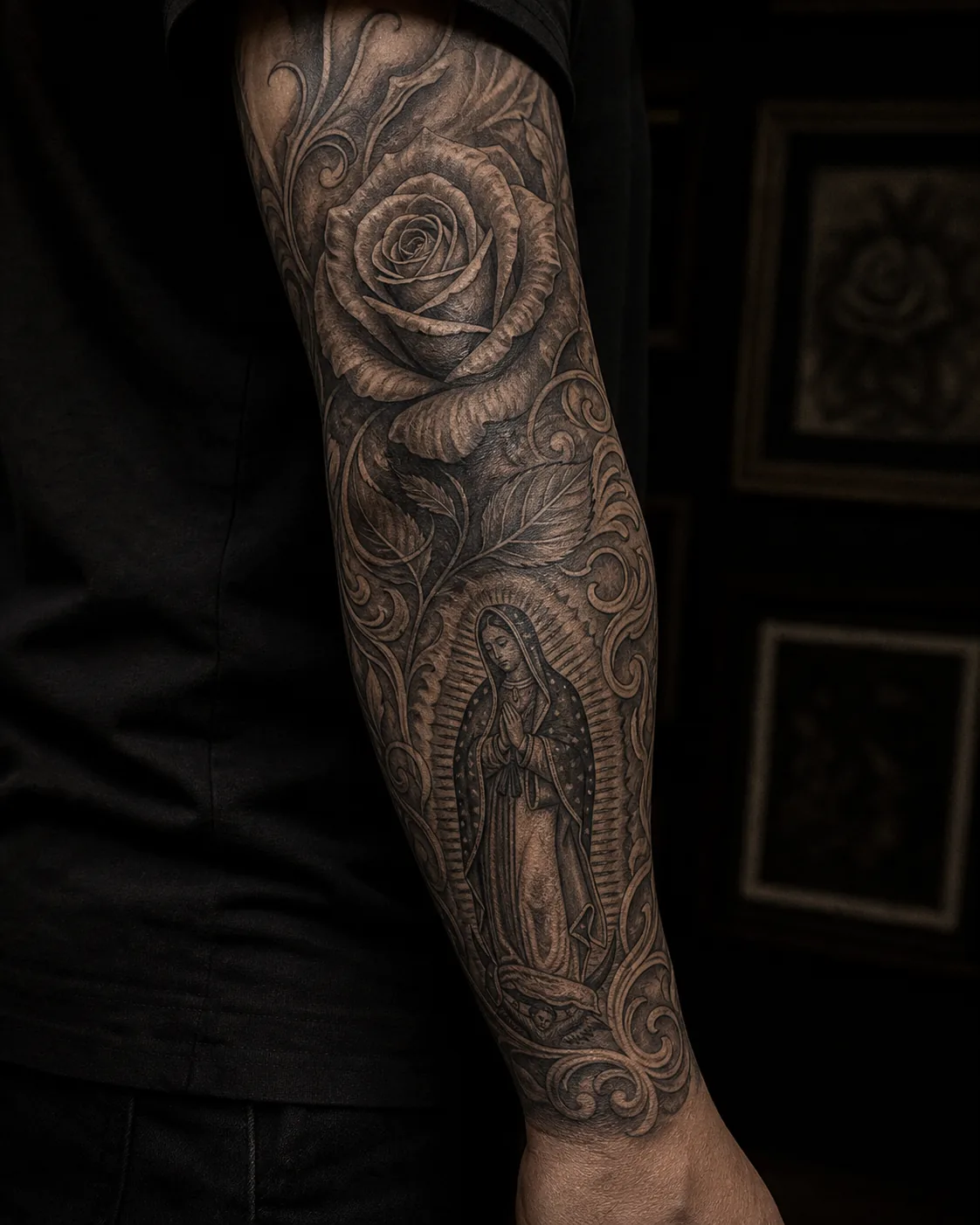
The Manual · First Edition
Designing to the Anatomy
A Tattoo Artist’s Manual · by Feliciana
The skin is not a flat page — it’s a living, moving form. Learn to design to the body: to sculpt with ink so the work reinforces the form instead of fighting it.
The Core Idea
There is no neutral ink.
Flat-Ink
Drawn on paper, transferred like a sticker. Ignores the body’s light and motion — the muscle reads flatter, the limb shorter, the form fights the art.
Sculpted
Designed to the anatomy. Value, flow, silhouette and motion answer the body’s own form — the muscle reads fuller, the limb longer, the work comes alive.
Proof on the Skin
Drag to see the difference.
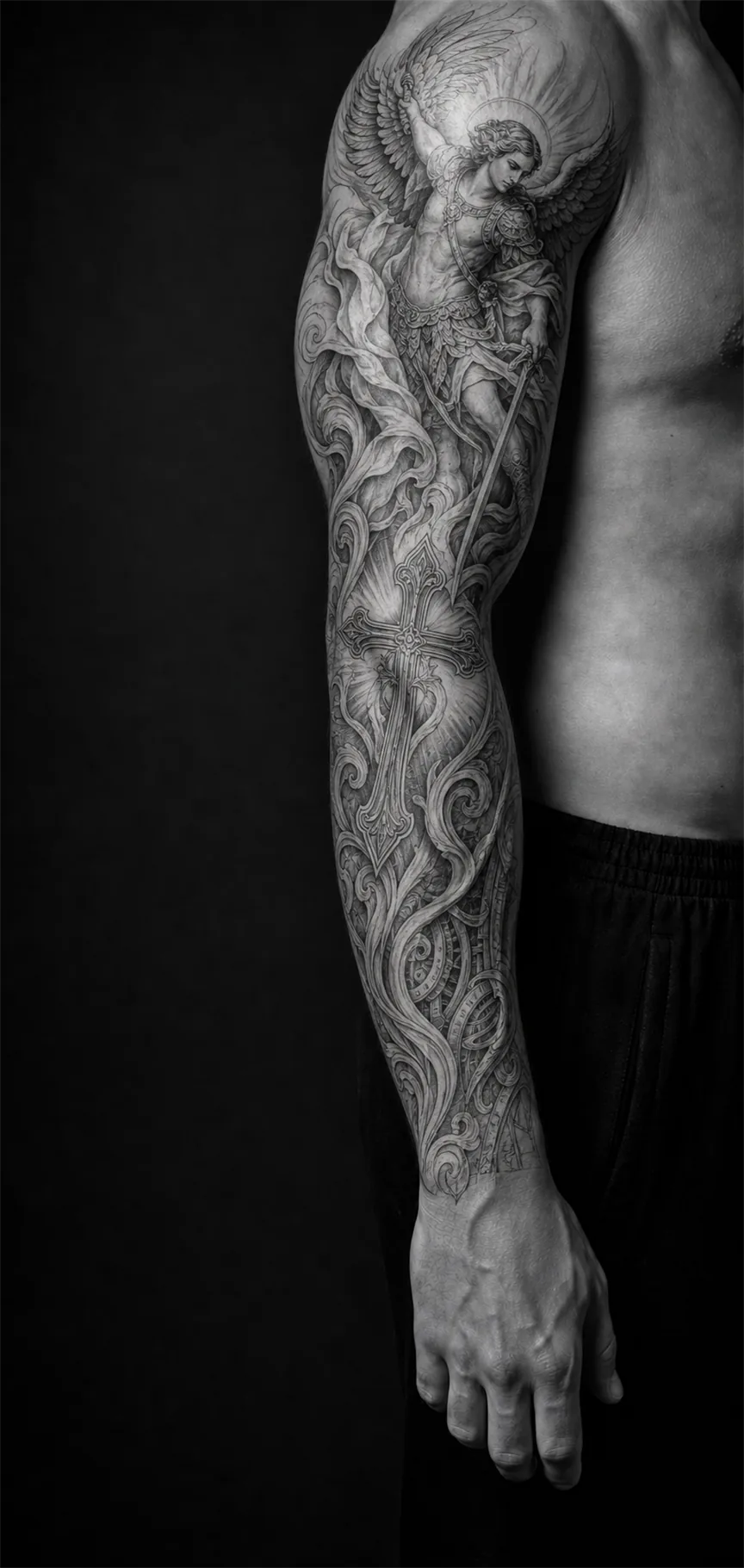
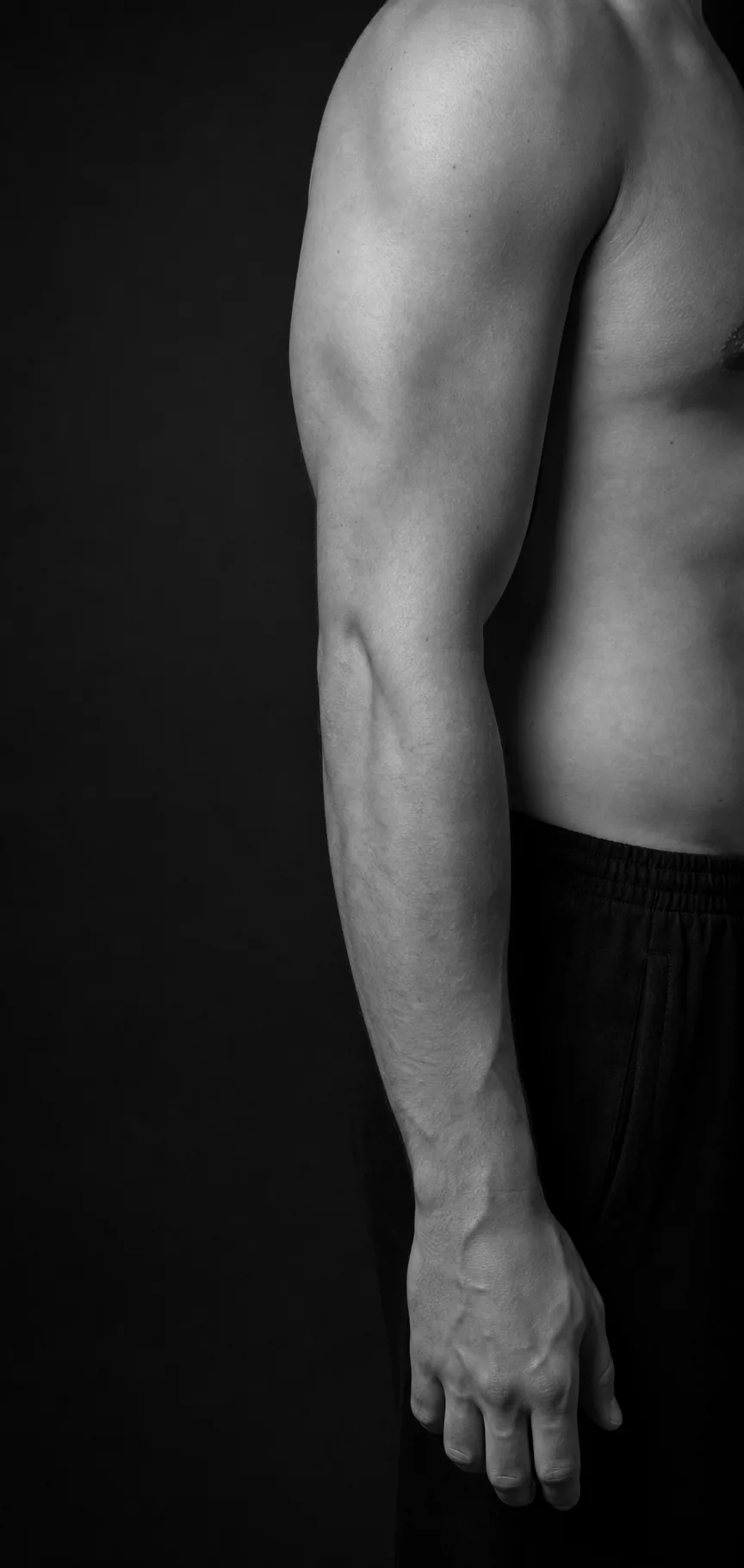
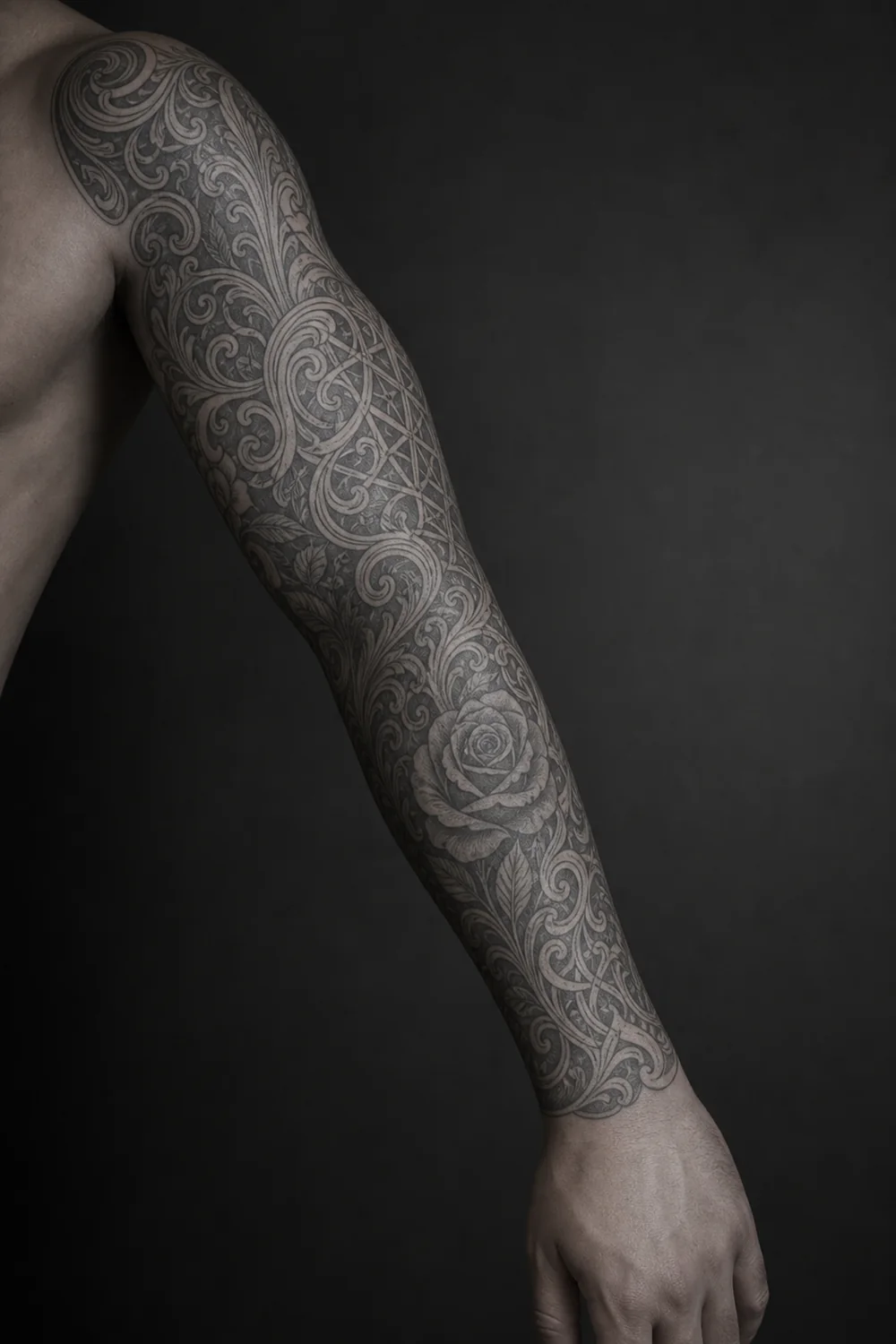
Same arm, same light. The only thing that changes is whether the ink was drawn to the body — and the body answers. Drag the handle, or focus it and use the arrow keys.
 BareInked
The artwork carries the arm
Nothing here came from the gym. Same man, same light — but the guardian’s wings build the shoulder, the linework runs with the muscle, and the darks sink only into the grooves. Drawn to the anatomy, the ink makes the arm read bigger than the skin it sits on.
 Flat inkSculpted
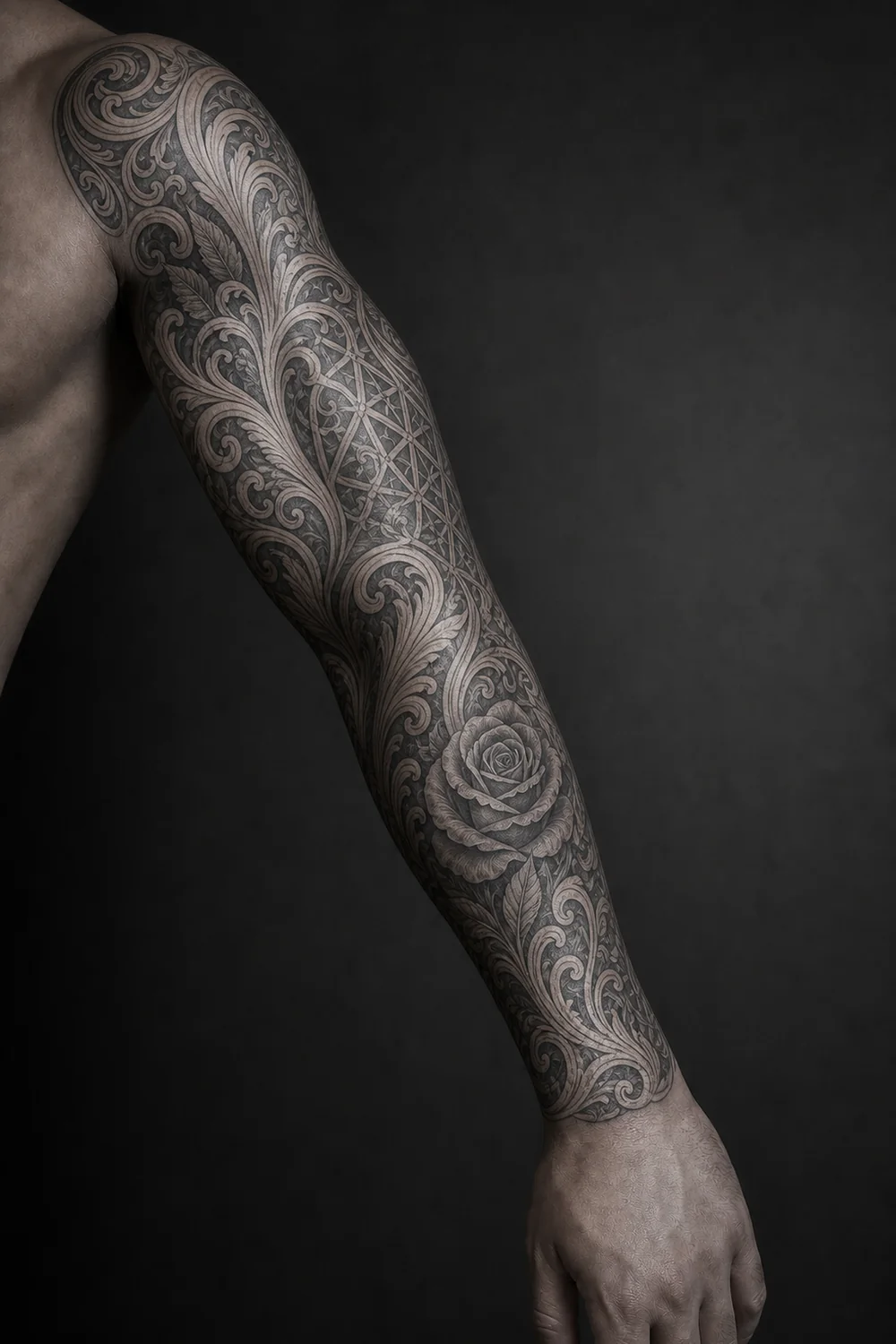
Flat ink hides. Sculpted ink reveals.
On the left, the design is laid down flat — even, pretty, and dead to the form. On the right, the same design is answered to the body: value follows the muscle, so the limb comes forward instead of flattening out.
Table of Contents
Thirteen Chapters
- I
The Skin Is Not a Page
Why a flat-page mindset fails on a living, three-dimensional form.
- II
The Anatomy of the Arm
The landmarks every design must answer to — and where they move.
- III
The Light Logic of Form
One fixed light source, and how the body's own planes catch it.
- IV
The Four Levers
Value placement, flow/line direction, silhouette/negative space, motion.
- V
Reading Light on a Real Arm
Translating the light logic onto an actual flexed forearm.
- VI
Flow & Line Direction
Letting line follow the muscle so the form reads fuller and longer.
- VII
Silhouette & Negative Space
Designing the gaps as deliberately as the marks.
- VIII
Designing for Motion
Flexed versus relaxed — composing for a body that never holds still.
- IX
The Method, Step by Step
A seven-step repeatable process from reference to sculpted ink.
- X
Beyond the Arm
Carrying the anatomy-first method to the back, ribs, and legs.
- XI
Practice Drills
Targeted exercises to build the eye for form.
- XII
Glossary
The working vocabulary of designing to the anatomy.
- XIII
Further Study
Where to go next — references, lineage, and the artists who taught me.
Free · Yours to Keep
Download the Guide
The full manual as a polished PDF — a step-by-step you can keep and follow. Drop your email and we’ll send it.
No spam. The manual, and the occasional note from the needle.