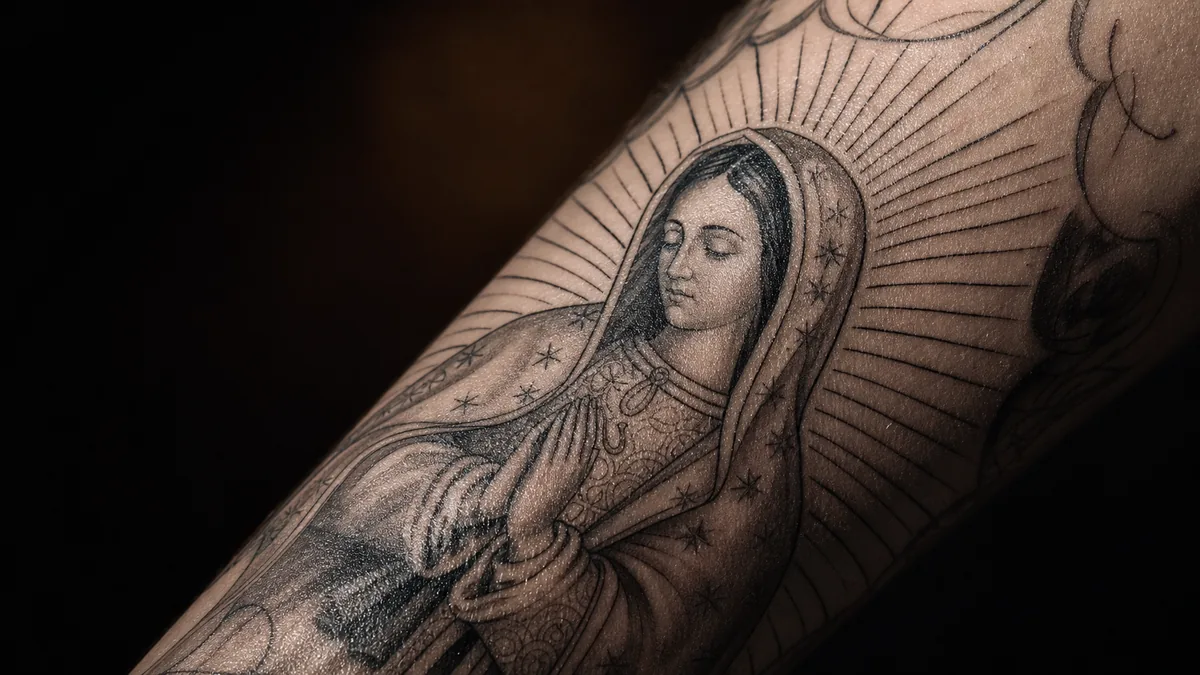
There Is No Neutral Ink: Designing to the Anatomy
The skin is not a flat page — it's a living, moving form. My new manual teaches artists to sculpt with ink instead of fighting the body.
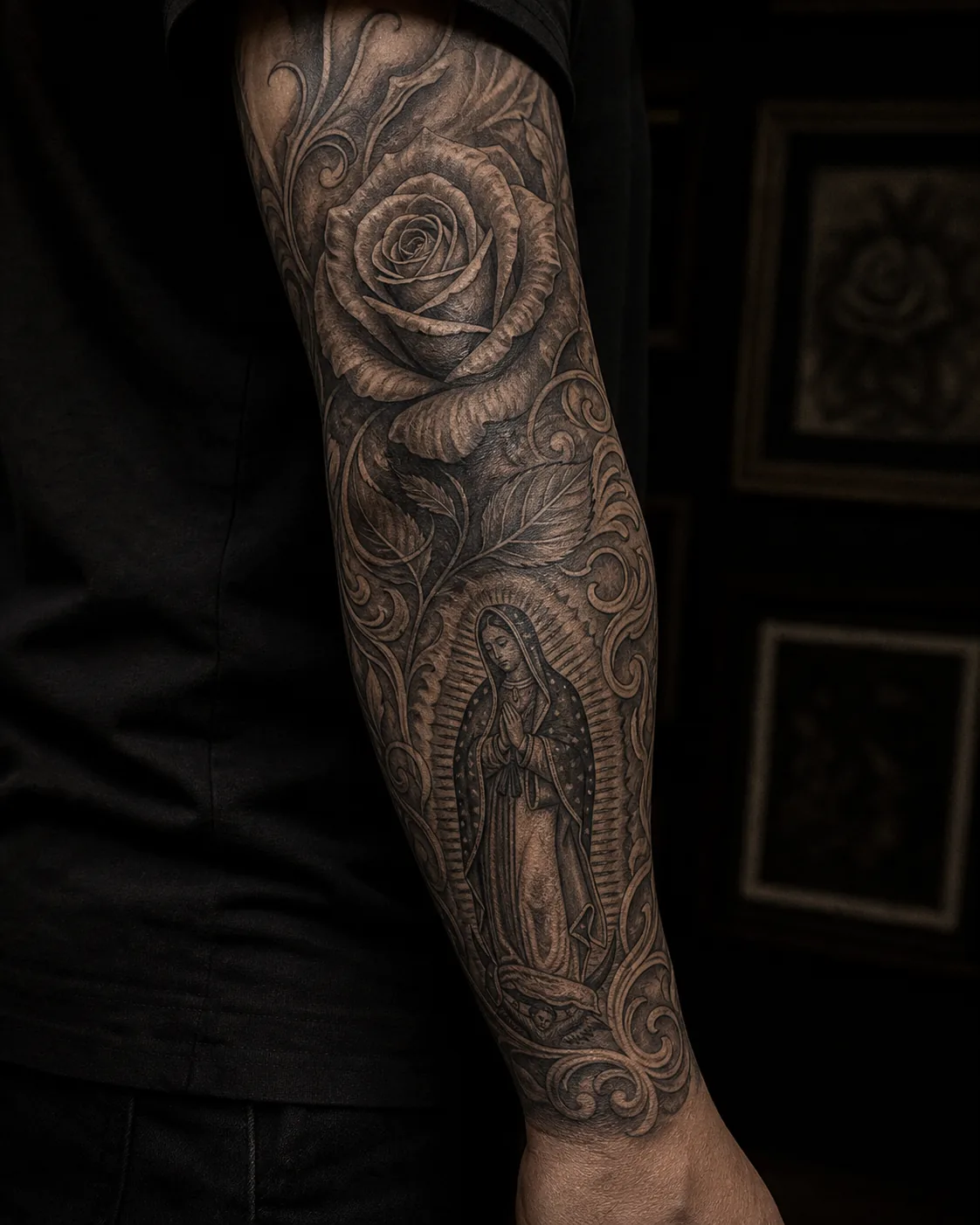
The skin is not a flat page — it's a living, moving form. My new manual teaches artists to sculpt with ink instead of fighting the body.
For years I drew tattoos the way most artists are taught to: flat, on paper, then transferred onto skin like a sticker onto a wall. The work was clean. It was also fighting the body the whole time. A tattoo isn’t printed onto a page — it lives on a moving, three-dimensional form, and that form has its own light, its own shadow, its own logic. Ignore it and the piece reads flat. Answer it and the muscle reads fuller, the limb reads longer, the form reads alive.
There is no neutral ink. Every line either reinforces the body’s own form — or argues with it.
The skin is not a page
The first chapter of the manual makes the case plainly: the skin is a sculpture you’re drawing on, not a canvas you’re drawing across. Once you accept that, four levers open up — value placement, flow and line direction, silhouette and negative space, and motion. Pull them in the body’s favor and you’re no longer decorating an arm. You’re sculpting with ink.
This article launches that manual — and the interactive arm viewer that ships with it, so you can turn the same forearm between bare, flat-ink, and sculpted, and see the difference for yourself.
Feliciana
Founder of Tinta 66 and author of Designing to the Anatomy. Single-needle realismo, paño shading, reverence over kitsch.